
Spine and back
Scoliosis
A sideways curvature of the spine, managed here by a chiropractor with advanced certification specifically in scoliosis.
What people notice
Signs that bring people in.
- Uneven shoulder or hip height
- One shoulder blade sitting more prominently than the other
- Clothing that consistently hangs unevenly
- Fatigue or aching after standing for long periods
- A visible curve or rib prominence when bending forward
How we approach it.
Tarron Woon holds Chiropractic Bio-Physics certification and Advanced Bio-Physics Scoliosis Management, which is why scoliosis is managed here rather than referred straight out.
Management is about assessment, monitoring and supporting function over time. What is appropriate depends heavily on the type and degree of curve, and that is a conversation to have after an assessment rather than before one.
What tends to be behind it.
Rarely one thing. These are the contributors the exam looks for, and the reason the assessment covers more than the spot that hurts.
01
Structural curvature
Some curves are structural and develop through growth rather than from anything done or not done.
02
Postural adaptation
Habitual asymmetric loading, such as always carrying on one side, can reinforce an existing curve pattern.
03
Muscular imbalance
Differences in strength and endurance between the two sides of the trunk affect how the curve is supported.
04
Reduced segmental movement
Restriction at particular spinal levels changes how load distributes across the whole curve.
InTouch is an integrated rehabilitation centre. Care here is directed at restoring movement and function, and every plan begins with an individual assessment rather than an assumption about your diagnosis.
The care we’d likely use
Related services
At the practice
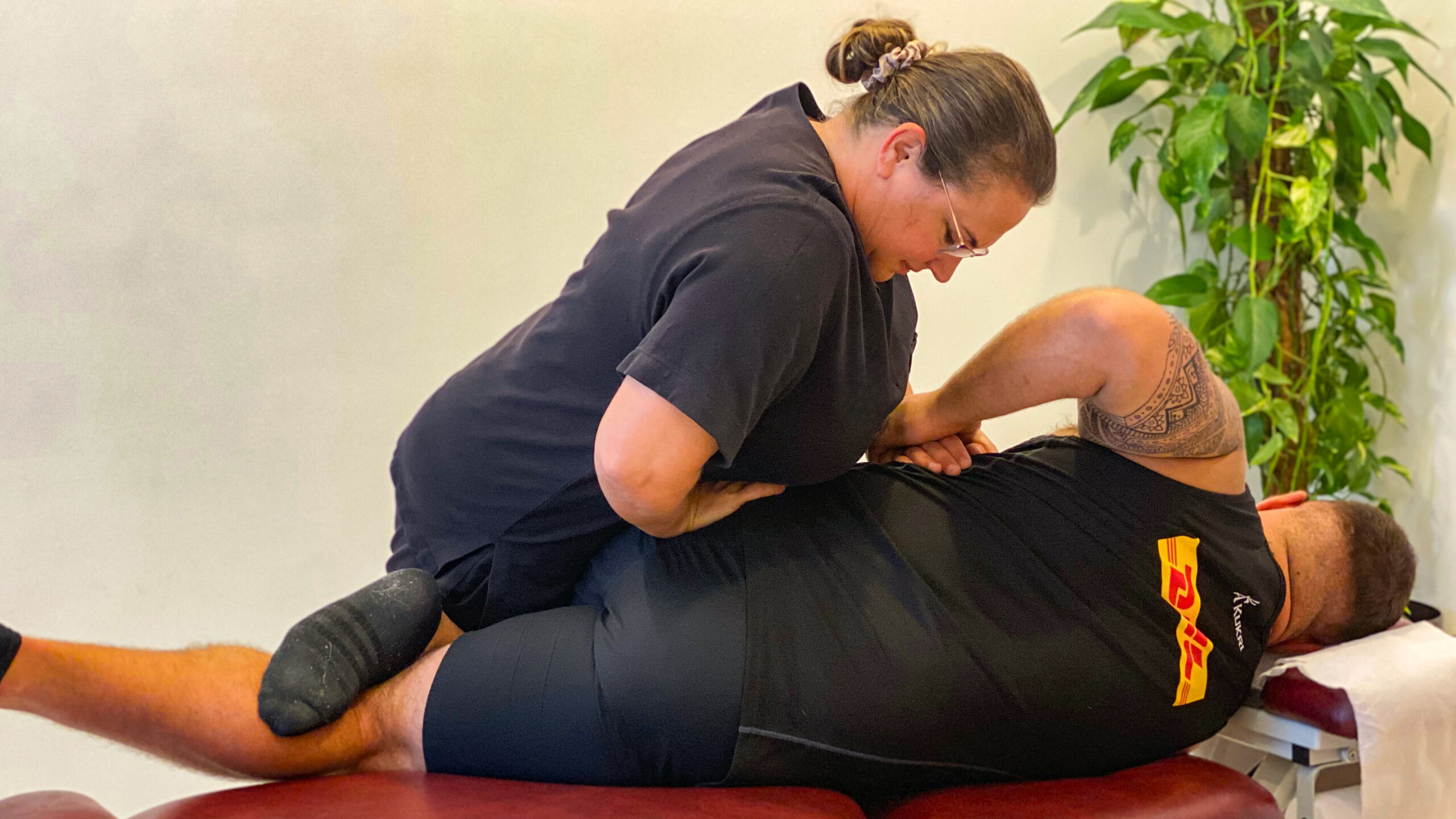
Management centres on assessment and monitoring, alongside exercise rehabilitation that supports the trunk through the curve rather than fighting it.
What happens next
What care looks like here.
The same first visit regardless of what brought you in, and nothing is decided until the findings are in front of you.
Step 1
Assessment
A full history and physical assessment, because the discipline you booked is not automatically the one you need.
Step 2
Findings and plan
What we found, explained in plain terms, and an integrated plan that can draw on any of the five disciplines here.
Step 3
Treatment
Hands-on care from the practitioners the plan calls for, with the teams talking to each other rather than working in parallel.
Step 4
Rehabilitation
Exercise rehabilitation to rebuild strength and control, plus the prevention work that keeps you from coming back for the same thing.
What happens after the first visit
InTouch does not publish fixed course lengths, and care is reviewed as you progress rather than run to a set number of sessions. What comes next is decided from how you respond, and it can draw on any of the five disciplines in the building.
Good to know
Common questions.
Can chiropractic care straighten a scoliosis curve?
That is not what is being offered here, and you should be cautious of anyone who promises it. What management aims at is assessment, monitoring the curve over time, and supporting function, comfort and trunk strength. Dr. Tarron will explain what is realistic for your specific curve after assessing it.
Start here
Your health deserves
better.
Whether something hurts today or you simply want to move well for a long time, it starts with one visit.