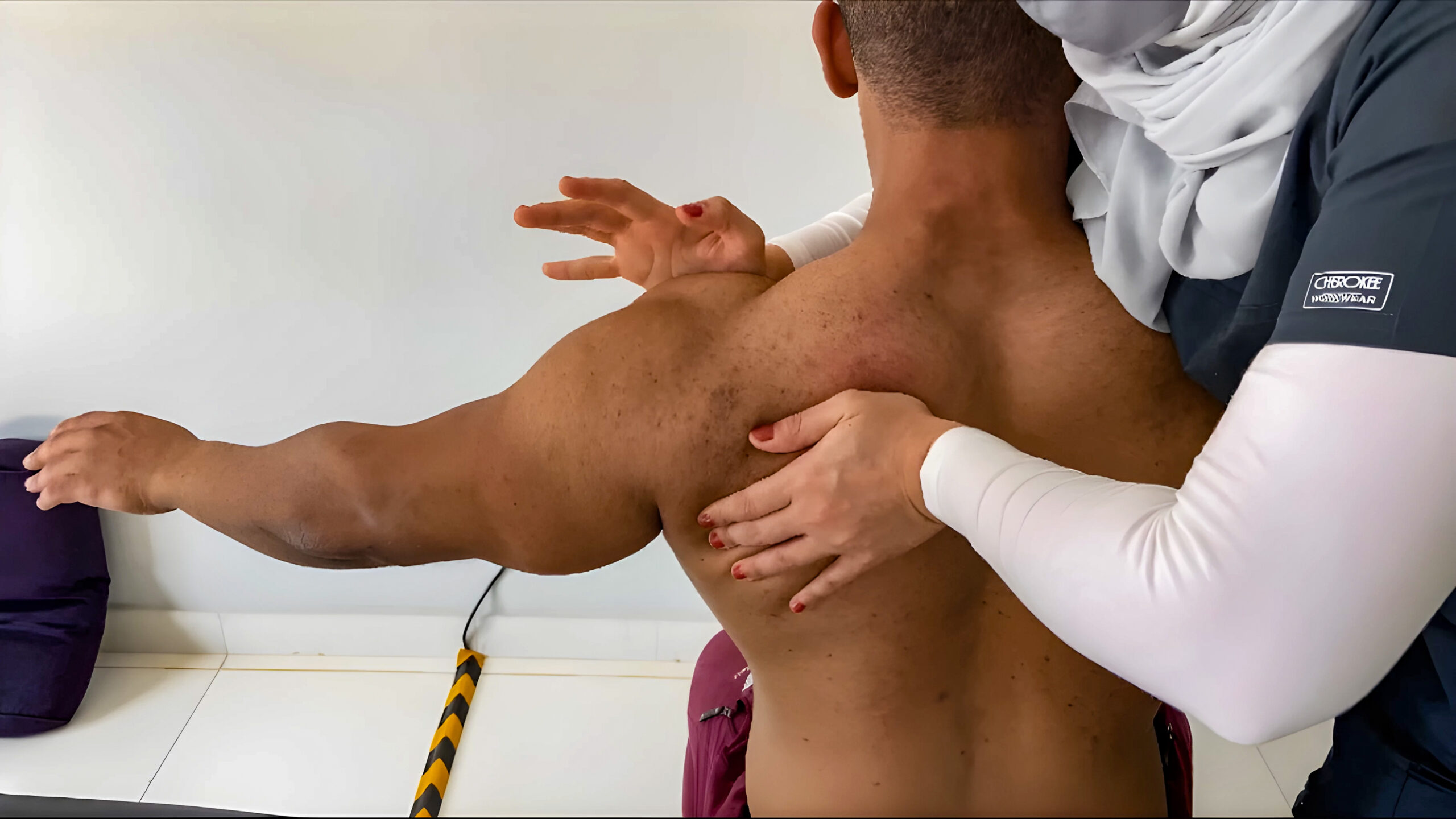
Neck and head
Mechanical Neck Pain
Neck pain that changes with position and movement, which InTouch lists as mechanical neck among the problems it treats.
What people notice
Signs that bring people in.
- Pain and stiffness turning your head to one side
- A tight band across the top of the shoulders
- Headaches that begin at the base of the skull
- Discomfort that builds through a working day at a screen
- Waking with a locked or seized neck
How we approach it.
Mechanical neck pain responds well to a combination of restoring movement and changing the loads that caused the restriction, which is why treatment here is rarely hands-on work alone.
Several of the physiotherapy team hold spinal manual therapy and Mulligan concept certifications, and the chiropractic team works the same cases, so which hands you are in follows the assessment.
What tends to be behind it.
Rarely one thing. These are the contributors the exam looks for, and the reason the assessment covers more than the spot that hurts.
01
Screen and desk position
A monitor below eye level holds the head forward, and the neck extensors work continuously to hold it there.
02
Restricted joint movement
When individual neck segments stop moving freely, neighbouring levels take more rotation than they should.
03
Upper back stiffness
A mid back that has stopped extending forces the neck to make up the difference on every reach and turn.
04
Sleep position
Pillow height and sleeping posture load the neck for hours at a time with no opportunity to adjust.
InTouch is an integrated rehabilitation centre. Care here is directed at restoring movement and function, and every plan begins with an individual assessment rather than an assumption about your diagnosis.
The care we’d likely use
Related services

At the practice
Care typically pairs manual therapy or adjustment to restore movement with specific endurance work for the deep neck and upper back.
What happens next
What care looks like here.
The same first visit regardless of what brought you in, and nothing is decided until the findings are in front of you.
Step 1
Assessment
A full history and physical assessment, because the discipline you booked is not automatically the one you need.
Step 2
Findings and plan
What we found, explained in plain terms, and an integrated plan that can draw on any of the five disciplines here.
Step 3
Treatment
Hands-on care from the practitioners the plan calls for, with the teams talking to each other rather than working in parallel.
Step 4
Rehabilitation
Exercise rehabilitation to rebuild strength and control, plus the prevention work that keeps you from coming back for the same thing.
What happens after the first visit
InTouch does not publish fixed course lengths, and care is reviewed as you progress rather than run to a set number of sessions. What comes next is decided from how you respond, and it can draw on any of the five disciplines in the building.
Start here
Your health deserves
better.
Whether something hurts today or you simply want to move well for a long time, it starts with one visit.