
Sport and injury
Muscle Strains and Spasms
Muscle strains, spasms and trigger points all appear on InTouch's published list, and they are the most common sports presentation here.
What people notice
Signs that bring people in.
- Sudden sharp pain during effort, often mid-stride or mid-lift
- A specific tender point you can put a finger on
- Tightness and guarding around the area
- Pain on stretching or loading the muscle
- Bruising appearing over the following days
How we approach it.
Strains are straightforward to settle and easy to re-injure, and the difference is almost entirely in what happens after the pain stops.
The sports team here has covered rugby, motorsport, triathlon and more at the event itself, so the return to play conversation is grounded in what actually happens when someone goes back too early.
What tends to be behind it.
Rarely one thing. These are the contributors the exam looks for, and the reason the assessment covers more than the spot that hurts.
01
Sudden load increase
Jumping training volume or intensity faster than tissue adapts is the most common single reason.
02
Inadequate preparation
Going into high speed or heavy effort without adequate warm up leaves tissue less able to tolerate it.
03
Previous unrehabilitated strain
Scar tissue and lost extensibility from an earlier strain make the same site more vulnerable.
04
Fatigue late in a session
Control drops as fatigue builds, and technique changes shift load onto tissue not prepared for it.
InTouch is an integrated rehabilitation centre. Care here is directed at restoring movement and function, and every plan begins with an individual assessment rather than an assumption about your diagnosis.
The care we’d likely use
Related services
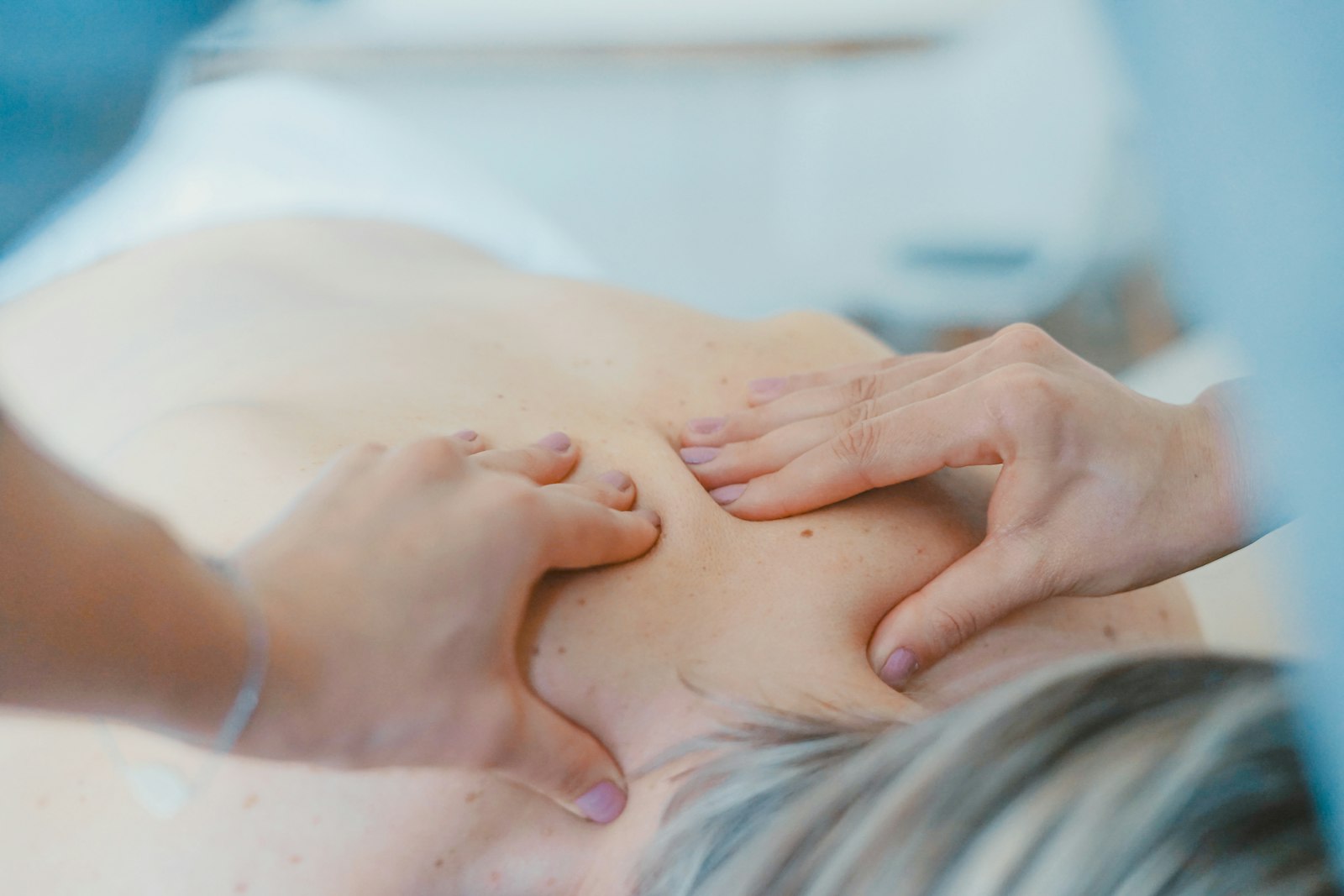
At the practice
Care moves from settling the acute strain to progressively loading the tissue, ending with the speed and intensity your sport actually demands.
What happens next
What care looks like here.
The same first visit regardless of what brought you in, and nothing is decided until the findings are in front of you.
Step 1
Assessment
A full history and physical assessment, because the discipline you booked is not automatically the one you need.
Step 2
Findings and plan
What we found, explained in plain terms, and an integrated plan that can draw on any of the five disciplines here.
Step 3
Treatment
Hands-on care from the practitioners the plan calls for, with the teams talking to each other rather than working in parallel.
Step 4
Rehabilitation
Exercise rehabilitation to rebuild strength and control, plus the prevention work that keeps you from coming back for the same thing.
What happens after the first visit
InTouch does not publish fixed course lengths, and care is reviewed as you progress rather than run to a set number of sessions. What comes next is decided from how you respond, and it can draw on any of the five disciplines in the building.
Start here
Your health deserves
better.
Whether something hurts today or you simply want to move well for a long time, it starts with one visit.