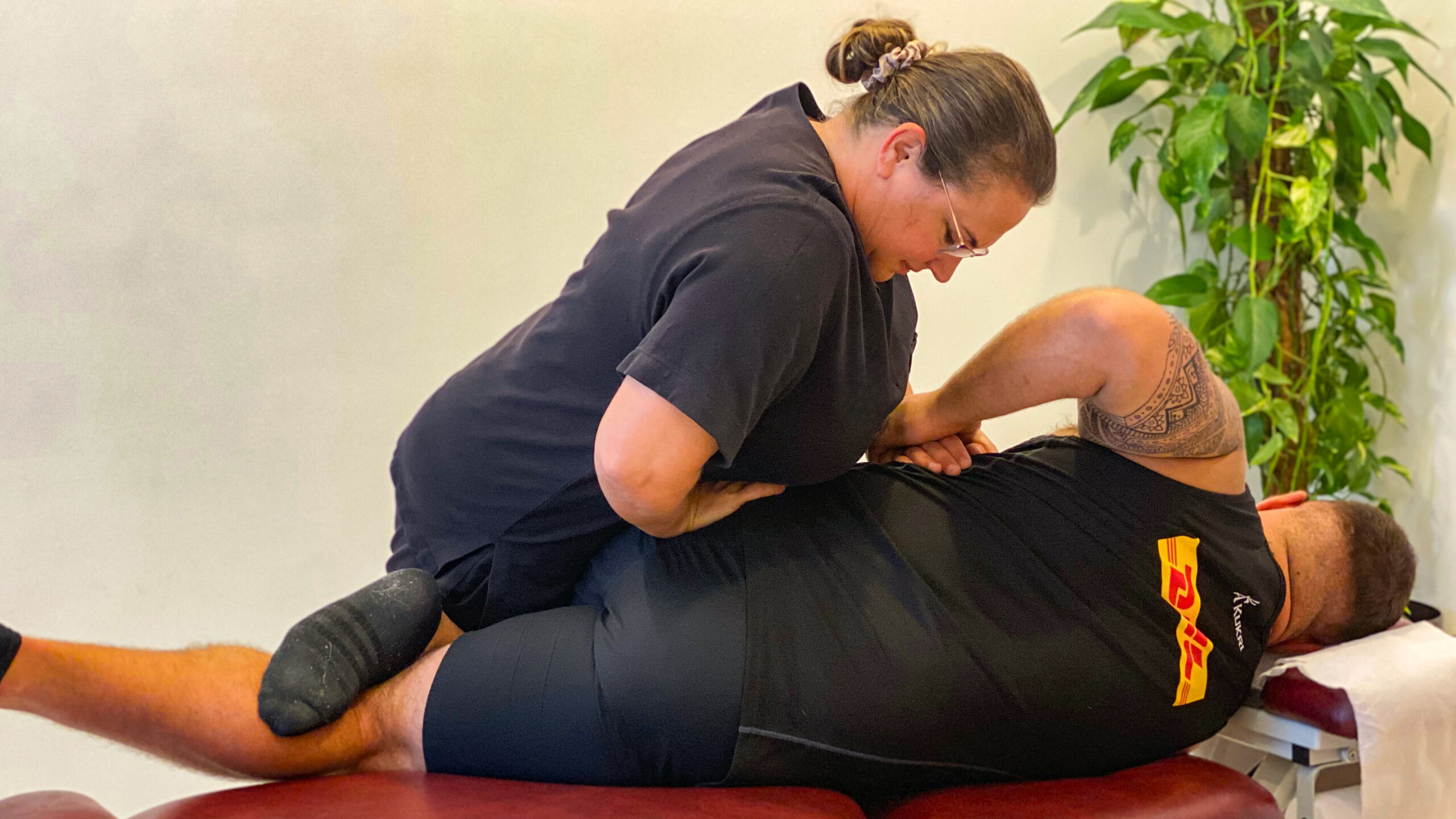
Spine and back
Low Back Pain
The single most common reason people come to InTouch, and the one where the difference between settling it and fixing it matters most.
What people notice
Signs that bring people in.
- A deep ache across the lower back that worsens through the day
- Stiffness on getting out of bed or standing up after sitting
- Pain that spikes when you bend, lift or twist
- A sense that the back might give way under load
- Difficulty finding a comfortable position to sleep in
How we approach it.
Low back pain is on the list of musculoskeletal problems InTouch treats, and it is where the integrated model earns its keep. The same complaint can be primarily a joint mobility problem, primarily a strength and control problem, or a mix, and those need different answers.
Assessment comes first. What that assessment finds determines whether you start with the chiropractic team, the physiotherapy team, or both, rather than the discipline you happened to book being the one that treats you.
What tends to be behind it.
Rarely one thing. These are the contributors the exam looks for, and the reason the assessment covers more than the spot that hurts.
01
Prolonged sitting
Long hours at a desk or behind a wheel load the lower back in one fixed position and let the supporting muscles switch off.
02
Lifting mechanics
Loading through a bent and rotated spine concentrates force in a small area rather than sharing it across the hips and legs.
03
Reduced joint movement
When segments of the spine stop moving well, the ones above and below take more than their share.
04
Deconditioning
Strength and endurance loss through the trunk and hips leaves the back doing work that other structures should be sharing.
InTouch is an integrated rehabilitation centre. Care here is directed at restoring movement and function, and every plan begins with an individual assessment rather than an assumption about your diagnosis.
The care we’d likely use
Related services

At the practice
Care usually pairs hands-on treatment to restore movement with graded exercise rehabilitation that rebuilds the strength and control keeping it settled.
What happens next
What care looks like here.
The same first visit regardless of what brought you in, and nothing is decided until the findings are in front of you.
Step 1
Assessment
A full history and physical assessment, because the discipline you booked is not automatically the one you need.
Step 2
Findings and plan
What we found, explained in plain terms, and an integrated plan that can draw on any of the five disciplines here.
Step 3
Treatment
Hands-on care from the practitioners the plan calls for, with the teams talking to each other rather than working in parallel.
Step 4
Rehabilitation
Exercise rehabilitation to rebuild strength and control, plus the prevention work that keeps you from coming back for the same thing.
What happens after the first visit
InTouch does not publish fixed course lengths, and care is reviewed as you progress rather than run to a set number of sessions. What comes next is decided from how you respond, and it can draw on any of the five disciplines in the building.
Good to know
Common questions.
Should I rest or keep moving?
For most mechanical back pain, extended bed rest tends to make things stiffer rather than better, and gentle movement within comfort is usually preferable. That said, this depends on what the assessment finds, so it is worth being assessed before deciding.
Start here
Your health deserves
better.
Whether something hurts today or you simply want to move well for a long time, it starts with one visit.